Initial Governance Model of the Demonstrator
AgrospAI will be based on an Organizational Governance system that will involve coordination, decision-making, and objective setting within the data space and will promote collaboration among multiple stakeholders. A Data Space Authority will be established, acting as the entity responsible for operationalizing and maintaining this governance, including managing disputes among participants.
This authority, at least during its period of operation as a demonstrator, will be the Universitat de Lleida as the data space operator. Later, it will evolve towards shared governance with participants, and options will be explored to establish an alternative Data Space Authority, compatible with also sustaining the operator's role, for example, as a new independent entity.
Furthermore, there is Data Sharing Governance, which regulates access to data and processing services among participants. The data operator, as the governance authority, will establish the initial rules with the requirements for incorporating participants into the demonstrator and the products and services available therein.
Initially, participants will be those listed at the beginning of this section who have already shown interest in the project by signing the letters of support attached to this application. The letters are based on a model that defines the requirements and benefits of being a participant in the demonstrator. From this initial set of participants, new participants will be incorporated, prioritizing those who complement existing use cases or enable the definition of new data space use cases.
For new use cases, priority will be given to those that leverage the demonstrator's capabilities, especially those with trust requirements that can be resolved with sovereignty-by-design functionality through data computation. Also, those that show greater potential thanks to the monetization capabilities that the demonstrator also provides.
Regarding data and processing services, governance will define the rules to follow when sharing data. In addition to being related to the agri-food sector, it will be essential to comply with the regulatory framework established at national and European levels.
To maximize interoperability both within the demonstrator's data space and with those with which it will interoperate, those of the Pontus-X ecosystem, but also others that use Gaia-X data space federation tools, the governance structure will be organized at 2 levels: a Global Governance that will harmonize interoperability between different data spaces and a specific governance body for the demonstrator, AgrospAI Governance.
Global Governance
Global Governance will primarily be that of the Pontus-X ecosystem as the entity responsible for defining the interoperability rules between the data spaces of this ecosystem. Governance is exercised jointly by all participants in the role of "federators," as shown in Fig. 1.
It is also relevant to mention the participation of many Pontus-X members in the governance bodies of Gaia-X Europe, and the interest of that ecosystem in aligning with Gaia-X specifications and components for data space federation.
Finally, although the project for the implementation of the future Common European Agricultural Data Space (CEADS) will not start until 2025, the results of the preparatory project AgriDataSpace (in which the Universitat de Lleida participated) already propose its future governance model based on a Network Administrative Organization (NAO). The evolution of the CEADS implementation project will be followed during 2025 to explore options for integrating AgrospAI into its NAO.
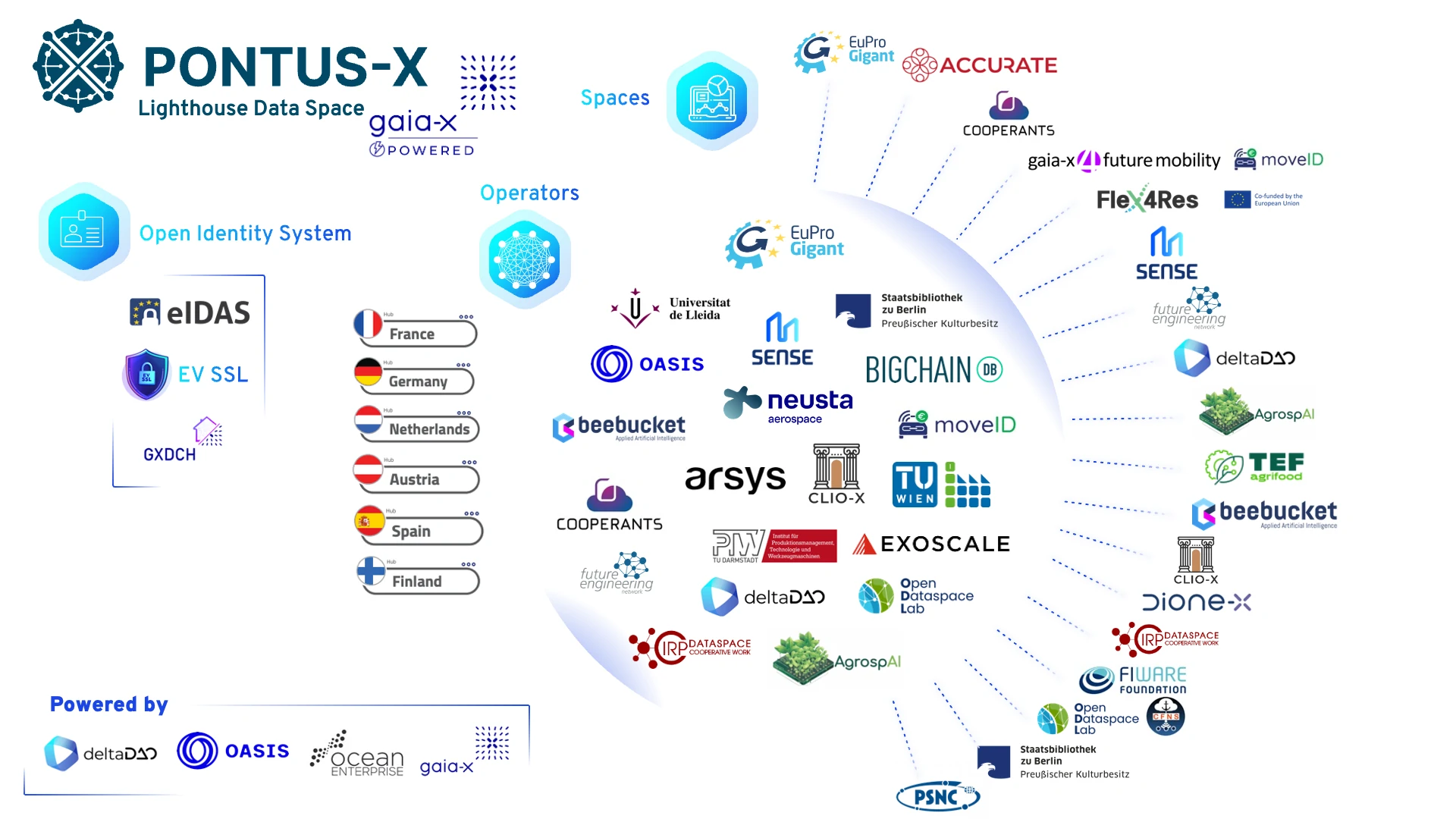 Fig. 1. Members of the Pontus-X ecosystem and its governance structure (source: deltaDAO AG)
AgrospAI Governance
Aligned with Global Governance, inherited from the ecosystems of which AgrospAI will be a part (Pontus-X, Gaia-X, and the future CEADS), governance will also be carried out at the demonstrator level. The roles within AgrospAI Governance will be:
- Ecosystem promoter: The Universitat de Lleida would be responsible, at least initially, for its governance and for defining and executing the processes of system onboarding and offboarding, as well as its supervision.
- Technology provider: The Pontus-X provider, presumably deltaDAO AG.
- Intermediation service providers: deltaDAO AG and Arsys.
- Data space operator: Universitat de Lleida but also those entities that operate the data computation intermediation service. Initially Arsys but open to any operator with computing resources that wants to commercialize through the data space.
- Providers and consumers: Those participants who have signed the letter of support as indicated above.
It is also important to identify the actors indirectly involved in this governance because they constitute the development communities of the components used by AgrospAI and the data spaces with which it would interoperate. Specifically, the development communities of Gaia-X, Eclipse, Pontus-X, and Ocean Protocol, all based on open source. And finally, the global interoperability and trust service providers, mainly the different providers of the GXDCH.
Regarding the organizational model of the demonstrator, it will be organized following the network model. Collaboration among all participants will be based on consensus, reciprocity, and the pursuit of collective goals and benefits. But the governance of a data space is not static, unchangeable over time, but must be understood as continuously evolving.
Within this model, regarding how its governance is managed, it will begin by following a leadership governance, where the promoter will act as the central coordinator. Throughout the project phase as a demonstrator, it will evolve towards shared governance, where the relevance of each decision will depend on the level of involvement of the participants. Reaching the end of the phase as a demonstrator, and looking ahead to the future sustainability of the data space, a decision will be made jointly on future governance through a Network Administrative Organization (NAO), a neutral coordination body.
As mentioned, AgrospAI will begin its journey following a leadership governance model, exercised by the demonstrator's promoter at least during the funded demonstrator phase. This model is detailed in Section 4.
Leadership Governance Model
AgrospAI's initial governance model, based on leadership by the demonstrator's promoter, addresses the aspects detailed in the following subsections.
Organizational interoperability
Participants and roles of the data space
Intermediation service provider role: for data computation or GXDCH. Open to any provider that meets the demonstrator's requirements regarding these components and guarantees of independence, especially within the DGA framework.
Openness to new participants: open to any economic agent in the agri-food sector. Admission rules based on technological criteria described in interoperability standards. Also, complementarity with respect to the use cases deployed in the demonstrator, or the potential for deploying new use cases relevant to the Spanish agri-food sector.
Business models
Business autonomy for providers and consumers who, within the options allowed by smart contract implementation, have complete business autonomy regarding terms of use and their acceptance.
Interrelation with other data spaces
Operation of the demonstrator within the decentralized network of the Pontus-X ecosystem. Demonstrator users can interrelate with other data spaces in the ecosystem, including intersectoral relationships.
Semantic interoperability
Description of service offerings
Variety of representable resources, as it allows describing different resources (data, applications for data exploitation, and computational resources).
Flexibility in service description, within the Gaia-X Trust Framework and the vocabularies it defines for describing data and processing services.
Definition of offer resources using recognized standards, also in the context of the Gaia-X Trust Framework.
Data sovereignty
Definition of resource use and access policies: the data space will initially use the information model of existing smart contracts within the Pontus-X framework to define resource access and use policies. During the project, options will be explored to integrate them with the access policy languages that are established within the Gaia-X framework.
Formats
Open standard W3C Verifiable Credentials (VC) formats for modeling information about participants and the data and services they share.
Conformity
Use of the Gaia-X Digital Clearing House (GXDC) as a conformity service that will guarantee the validity of the formal composition and content of credentials for participants and for the descriptions of the data and services they share.
Technological interoperability
Data space architecture
Architecture based on digital data federation and integrated into the network of data federations provided by the specifications and open-source licensed components of the Pontus-X ecosystem and the Gaia-X initiative.
Solution components
Components made available in open-source format within the framework of the Ocean Protocol initiative (on which the Pontus-X ecosystem is based), Gaia-X, Eclipse Dataspace Components (EDC), and Eclipse Cross Federation Services Components (XFSC) are reused.